
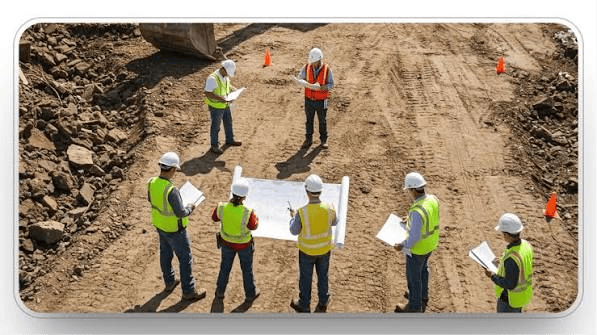
Before a single footing is poured, every successful construction project depends on one foundational question: what is site preparation construction, and why does it determine so much of a project's outcome? Site preparation is the process of getting raw land ready to build on, covering everything from clearing vegetation to testing soil to shaping the land through grading. Builders and investors who understand this process well tend to avoid the costly surprises that come from skipping steps or rushing the early phases of a project.
This guide walks through each stage of site preparation in the order it typically happens, along with why each step matters for the long-term success of a build.
Step 1: Site Assessment and Survey
Every project starts with a thorough survey of the land. This step identifies property boundaries, existing structures, utility locations, topography, and any environmental factors that could affect construction. Investors evaluating raw land often rely on this survey to determine whether a parcel is even viable for the project they have in mind.
A proper survey also flags trees, wetlands, or other natural features that may need special handling. On sites with mature or valuable trees, large tree relocation can preserve established landscaping that would otherwise be lost during clearing, which matters for projects where curb appeal and long-term property value are part of the plan.
Step 2: Vegetation and Land Clearing
Once the survey is complete, crews clear trees, brush, and debris from the areas marked for construction. This step opens up the site and gives equipment room to operate safely.
Selective clearing, where only vegetation within the construction footprint is removed, is common on sites where preserving some existing landscaping supports the project's long-term value. Builders comparing their options may want to look at how tree relocation cost versus tree removal cost stack up before finalizing a clearing plan.
Step 3: Grubbing and Root Removal
After surface clearing, grubbing removes stumps and root systems left behind. This step is easy to overlook but critical, since leftover roots can decompose over time and cause soil settling, drainage issues, or foundation problems years after construction wraps up.
Step 4: Soil Testing
Soil testing importance cannot be overstated at this stage of a project. Testing reveals soil composition, load-bearing capacity, drainage characteristics, and contamination risks, all of which directly influence foundation design and construction methods.
Common soil tests include:
Geotechnical Testing — Determines soil strength and stability for foundation design.
Percolation Testing — Measures how well soil drains, which is critical for septic systems and stormwater planning.
Compaction Testing — Confirms the soil density needed to support structures and pavement.
Skipping soil testing is one of the most common ways projects run into unexpected costs later, since foundation problems discovered after construction begins are far more expensive to fix than issues caught during planning.
Step 5: Grading Land
Grading land shapes the site to the correct elevation and slope for construction. Proper grading directs water away from buildings, prevents erosion, and creates a level, stable base for foundations, driveways, and utilities.
- Grading typically involves:
- Cutting high points and filling low points to reach the design elevation.
- Establishing slopes that direct stormwater toward designated drainage areas.
- Compacting soil in stages to reach proper density.
Step 6: Excavation Basics
With grading complete, excavation begins for foundations, basements, and underground utilities. Excavation basics include digging to the correct depth, shoring trench walls where required for safety, and verifying soil conditions match what geotechnical testing predicted.
Excavation work also typically includes trenching for utility lines such as water, sewer, electrical, and gas, all of which need to be coordinated carefully with the grading plan to avoid conflicts once construction moves forward.
Step 7: Utility Installation and Coordination
Before foundations go in, underground utilities are typically installed or at least mapped and marked. Coordinating with utility companies early prevents delays and reduces the risk of damaging existing lines during excavation.
Step 8: Final Site Prep and Inspection
The last step in most land development steps sequences is a final review before vertical construction begins. This typically includes confirming compaction meets engineering specifications, verifying drainage works as designed, and completing any remaining permits or inspections required by local jurisdictions.
Construction Prep Checklist for Builders and Investors
A construction prep checklist helps keep a project organized across every phase of site work. Key items typically include:
- Confirm property survey and boundary documentation.
- Evaluate existing trees and vegetation for clearing, relocation, or preservation.
- Schedule soil testing before finalizing foundation design.
- Coordinate grading and excavation plans with the project engineer.
- Verify utility locations before any digging begins.
- Confirm local permits and regulatory requirements are in place.
Why Site Preparation Deserves More Attention Than It Gets
Site preparation rarely gets the same attention as the visible parts of a build, yet it determines how smoothly everything afterward goes. A rushed or incomplete site prep phase often resurfaces later as drainage problems, foundation settling, or unexpected costs that could have been avoided with more thorough planning upfront.
Investors evaluating raw land, in particular, benefit from factoring site preparation costs and timelines into their initial project analysis rather than treating it as an afterthought once the deal closes.
Handling Trees and Landscaping During Site Prep
Trees present a unique consideration during site preparation, since they add both logistical challenges and long-term property value. Rather than clearing every tree on a lot by default, many builders now evaluate which specimens are worth preserving through relocation.
Contractors managing larger sites should also review common tree relocation mistakes contractors make, along with steps to protect existing trees during construction projects that are staying in place. Builders working in regulated jurisdictions should also confirm tree relocation permits and regulations before mobilizing equipment.
Conclusion
Understanding what site preparation construction actually involves gives builders and investors a clearer picture of what it takes to turn raw land into a buildable site. From the initial survey through grading, soil testing, and excavation, each step builds on the one before it, and skipping any of them tends to show up later as an expensive problem rather than a minor inconvenience. Projects that treat site preparation as a core part of the build, rather than a formality before the real work begins, consistently see fewer delays and stronger long-term outcomes.
Planning a project that involves clearing, grading, or preserving mature trees? Call Colorado Tree Spade at (303) 841-9393 or request a site walkthrough to get a clear picture of what your land needs before construction starts.
Frequently Asked Questions
1. What is site preparation in construction?
Site preparation is the process of getting raw land ready for building, including surveying, clearing vegetation, grubbing, soil testing, grading, and excavation before foundation work begins.
2. Why is soil testing important before construction?
Soil testing reveals load-bearing capacity, drainage characteristics, and potential contamination, all of which directly affect foundation design and help prevent costly structural issues later.
3. What is the difference between grading and excavation?
Grading shapes the overall land surface to the correct elevation and slope, while excavation involves digging for foundations, basements, and utility trenches once grading is complete.
4. What should be included in a construction prep checklist?
A solid checklist covers property surveys, vegetation and tree evaluation, soil testing, grading and excavation coordination, utility verification, and permit confirmation before construction begins.
5. Do investors need to worry about site preparation before buying raw land?
Yes. Site preparation costs and timelines can significantly affect a project's budget and schedule, so factoring them into the initial evaluation of raw land helps avoid surprises after a purchase closes.