
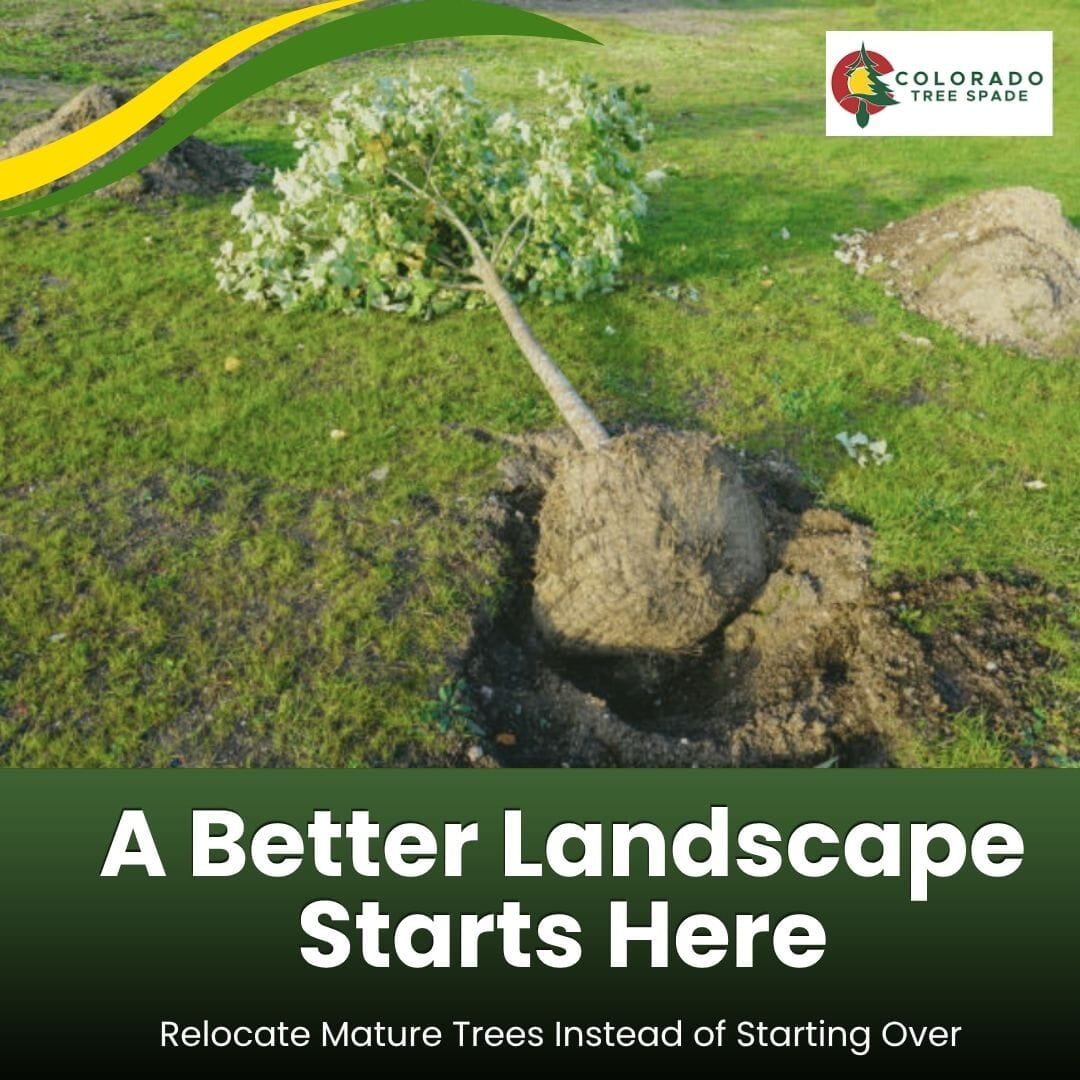
When planning a successful landscape design,
At Colorado Tree Spade, tree relocation is treated as more than a moving service. It is a practical way to improve outdoor spaces while protecting established natural assets. Whether you are redesigning a residential yard, updating a commercial site, or preparing land for construction, transplanting mature trees can play a major role in your overall landscape design strategy.
A well-placed mature tree can change the entire look and function of a property in just hours instead of waiting years for younger nursery stock to grow. That is where the real value begins.
Why Mature Trees Matter in Landscaping Projects
Mature trees do much more than “fill space” in a yard or commercial property. They shape the entire experience of an outdoor environment.
They provide structure, soften hardscapes, improve privacy, reduce visual emptiness, and help a property feel established. In many cases, they are the element that makes a landscape feel complete.
When these trees are removed too early during renovation or development, a property often loses instant character. New plantings can help, but they usually cannot replace the presence and scale of a mature tree for many years.
That is why tree transplanting has become such a valuable option. Instead of losing those benefits, property owners can reposition them to better support a new plan.
Tree relocation supports design without sacrificing maturity
A landscaping project often requires change. You may need to open a view, shift circulation, add outdoor living areas, improve access, or prepare for a build. That does not always mean cutting down healthy trees.
With professional tree relocation, mature trees can often be moved to a more strategic location where they continue to contribute to the property and support the updated layout. According to Colorado Tree Spade, this allows clients to gain views, privacy, and property value while preserving the landscape’s integrity and character.
Tree Transplanting Creates Immediate Visual Impact
One of the biggest challenges in landscaping is time.
Most people want a finished result sooner rather than later. Newly planted trees can look sparse for years, especially on larger lots or commercial sites where scale matters. Mature trees solve that problem immediately.
A transplanted tree already has height, canopy, presence, and visual weight. It can anchor a front yard, frame a driveway, soften a large building façade, or create instant balance in a wide-open space.
Why this matters for residential projects
For homeowners, instant maturity helps outdoor spaces feel polished and livable much faster. A large transplanted tree can:
- define property edges
- create backyard privacy
- soften a new addition or hardscape
- provide shade for seating or play areas
- preserve a meaningful family tree
Instead of waiting 10 to 20 years for a landscape to “grow in,” the project can feel complete much sooner.
Why this matters for commercial and development projects
For developers and commercial property owners, mature landscaping can improve how a site is perceived from day one. A finished, well-balanced exterior can make a property feel more established, more intentional, and more valuable to buyers, tenants, and visitors.
That visual strength often contributes directly to perceived ROI.
Tree Transplanting Helps Increase Property Value
One of the strongest reasons property owners invest in tree relocation is the connection between healthy mature landscapes and
Well-designed landscapes are not just decorative. They influence curb appeal, usability, comfort, and first impressions. Mature trees often play a major role in all four.
Colorado Tree Spade emphasizes that tree relocation can help increase property value while preserving established beauty and creating privacy or opening scenic views.
How transplanted trees add measurable value
Tree transplanting can support property value in several practical ways:
1. Better curb appeal
A mature tree adds scale and elegance that young trees simply cannot match.
2. More usable outdoor space
Relocating a tree can improve yard flow, create defined gathering zones, or support better shading for functional use.
3. Improved privacy
Trees can be repositioned to screen neighboring properties, roads, utilities, or commercial views.
4. Faster project completion feel
A landscape that looks complete right away often feels more premium and more market-ready.
5. Preservation of established assets
Healthy mature trees already represent years of natural growth and visual investment. Saving them can be more valuable than replacing them.
This is especially important in higher-end residential projects, golf-adjacent properties, ranch properties, and large-lot developments where landscape maturity is part of the appeal.
A Smarter ROI Than Starting Over
When people think aboutucing loss and preserving value already on site.
A healthy mature tree has already spent years becoming what it is. Removing it and replacing it with smaller stock often means paying for demolition, disposal, stump grinding, replacement material, and then years of waiting.
That is not always the most efficient path.
Tree relocation can be more cost-effective than many assume
Colorado Tree Spade notes that, in many cases, relocating a tree over 10 feet tall can be cheaper than purchasing a comparable one from a nursery, and often more practical than full removal and replacement.
That changes the conversation significantly.
Instead of asking, “Should we remove this tree?” a better question may be:
“Can this tree be used more effectively somewhere else on the property?”
That shift often leads to better design and better long-term value.
Tree Transplanting Supports Better Landscape Design Planning
Strong landscape design is not just about aesthetics. It is about planning where every feature works best over time.
That includes:
- tree placement
- sightlines
- access
- drainage
- shade patterns
- privacy needs
- future growth
Sometimes the original tree location no longer works with the current use of the property. A tree may block a new driveway, interfere with an addition, compete with grading plans, or crowd a view.
Relocation allows the design to evolve without losing the tree entirely.
Trees can become functional design elements
A transplanted tree can be used intentionally to support the layout of a property. For example:
To frame a view
A tree can be moved to the side rather than removed completely, allowing a scenic opening while still preserving visual depth.
To create privacy
Mature trees can be grouped or aligned to block roads, neighboring structures, or service areas.
To establish windbreaks
On larger or more exposed properties, relocated trees can help reduce wind and improve comfort.
To anchor outdoor living areas
A well-positioned tree can provide scale and shade for patios, seating zones, or entry features.
This is where tree transplanting becomes a true design tool, not just a preservation effort.
It Preserves the Character of the Property
Every established property has a natural identity. Mature trees are often central to that identity.
Once they are gone, the site can feel exposed, unfinished, or disconnected from its original charm. This is especially true for:
- older residential lots
- custom homes
- mountain or foothill properties
- golf communities
- ranch and estate landscapes
- legacy family properties
Tree transplanting helps retain that sense of place while still making room for change.
Why this matters emotionally and visually
Some trees are not just landscaping. They are part of the story of the property.
Colorado Tree Spade specifically speaks to preserving meaningful trees planted by loved ones and helping homeowners protect what matters while enhancing the home.
That kind of preservation matters for more than sentiment. It also helps the property keep the mature, rooted look that many people value most.
Tree Relocation Supports Sustainable Landscaping
Modern landscaping is increasingly about stewardship, not just installation.
Homeowners and developers alike are looking for ways to build and redesign responsibly. Tree transplanting supports that goal by keeping healthy mature trees in use rather than sending them to removal.
Colorado Tree Spade positions relocation as a sustainable alternative to cutting trees down, helping clients support greener, more thoughtful development.
Environmental value also supports project value
Saving mature trees can help:
- reduce unnecessary waste
- preserve shade and cooling benefits
- maintain established root systems in the landscape
- protect the long-term visual ecology of a site
- support more responsible site development
For many commercial, municipal, and residential projects, sustainability is no longer a bonus. It is part of the value proposition.
That makes tree transplanting a strong fit for both environmental goals and ROI goals.
Why Tree Spading Makes a Difference
Not all tree moving methods are equal.
The way a tree is relocated has a major impact on its stress level, survivability, and long-term success. Colorado Tree Spade highlights that moving trees with a spade keeps the root ball and native soil together, which helps reduce stress and improve outcomes.
Root preservation matters
One of the biggest advantages of professional tree spading is that more of the root system can remain intact. That matters because roots are critical to how the tree absorbs water, nutrients, and stability after the move.
Colorado Tree Spade also notes a survival rate of over 90% when proper before and after care is followed.
That makes transplanting not only a design choice, but a practical one when handled correctly.
The Best Landscaping Projects Start With Better Site Decisions
A lot of expensive landscape mistakes happen early.
Trees are removed too quickly. Layout decisions are made before the site is fully understood. Existing natural features are treated like obstacles instead of opportunities.
The better approach is to evaluate what is already working on the property before deciding what must go.
Questions worth asking before removing a mature tree
Before cutting down a healthy tree during a project, it is worth asking:
- Does this tree add privacy somewhere else on the site?
- Could it frame or soften a new feature?
- Would it help improve balance in the new
- Is it adding hidden property value right where it is?
- Would moving it create better ROI than removing it?
Those questions often reveal that relocation is the stronger option.
When Tree Transplanting Makes the Most Sense
Tree relocation is especially valuable in landscaping projects where:
- a healthy mature tree is in the wrong place
- the property needs instant privacy or scale
- a redesign would benefit from mature canopy
- a construction project threatens valuable existing trees
- the owner wants to preserve meaningful landscape features
- the goal is to improve both beauty and,
It is not always about moving every tree. It is about identifying which trees can continue adding value in a better location.
For property owners looking to source mature trees for relocation opportunities, Colorado Tree Spade also offers a usefulTrees Available page where available inventory and tree opportunities may support project planning.
Aftercare Protects the Value of the Investment
Relocating a tree is only part of the process. Long-term value comes from helping that tree establish successfully in its new home.
Colorado Tree Spade’s care guidance emphasizes consistent watering, mulching, and patient establishment over time. Their published guidance notes that transplanted trees may need at least three years to fully establish and that watering remains especially important in the early weeks and months.
Why aftercare matters to landscaping success
A transplanted tree is not “done” the moment it is planted.
Its ongoing health affects:
- appearance
- survival
- project success
- future shade and structure
- long-term
That means aftercare is part of the real the project.
A well-executed relocation with poor follow-up can reduce results. A properly moved tree with solid care can continue delivering value for decades.
Final Thoughts
A great landscaping project is not only about what you add. It is also about what you choose to save.
Tree transplanting gives homeowners, developers, and property managers a practical way to protect mature beauty while improving layout, usability, privacy, and long-term value. It allows a property to evolve without losing the very elements that make it feel established and memorable.
When integrated thoughtfully into a
If your project includes healthy trees that no longer fit the current layout, it may be worth exploring whether they can become one of the most valuable features of the finished design.
To learn more or discuss your project, contact Colorado Tree Spade through their Contact Us page.
FAQs
1. How does tree transplanting help with landscape design?
Tree transplanting helps improve landscape design by allowing mature trees to be repositioned where they better support views, privacy, outdoor living areas, circulation, and overall layout. Instead of removing valuable trees, they can become part of the updated design.
2. Does moving a mature tree increase property value?
In many cases, yes. Mature trees often contribute to curb appeal, privacy, shade, and overall landscape quality, all of which can support property value when the tree is healthy and placed well.
3. Is tree transplanting a better ROI than removing and replacing?
It can be. When a mature tree is healthy and usable elsewhere on the property, relocation may offer betterhan removal, disposal, stump grinding, and replacement with smaller stock that takes years to mature.
4. Can large trees really survive being moved?
Yes, when handled properly. Colorado Tree Spade states that professionally relocated trees can have a strong success rate when proper before and after care is followed. Root preservation, timing, access, and watering all matter.
5. What should property owners do before deciding to remove a tree?
Before removing a mature tree, property owners should evaluate whether it can be relocated to improve privacy, structure, balance, or usability elsewhere on the property. In many landscaping projects, moving a tree can preserve both beauty and long-term value.
You can edit text on your website by double clicking on a text box on your website. Alternatively, when you select a text box a settings menu will appear. your website by double clicking on a text box on your website. Alternatively, when you select a text box